
APPLICATIONS
Chemistry for Diverse Industries
Reliable chemical solutions supporting agriculture, food, pharmaceuticals, manufacturing and other industries worldwide.
Related Posts
- ▶ When should a water treatment chemical dosage be adjusted?
- ▶ When are inorganic chemicals a better fit than organic alternatives?
- ▶ How to verify batch consistency in industrial chemical raw materials
- ▶ How to qualify pharmaceutical raw materials before production approval
- ▶ How recycled content changes the performance of plastic raw materials
- ▶ How agricultural chemical prices affect seasonal purchasing plans
Send Us A Message
Water Treatment & Environmental
In chemical manufacturing, water is rarely just water. It may carry dissolved salts, suspended solids, residual solvents, acids, alkalis, pigments, metals, or traces of process-specific compounds. Once those streams leave the production line, they become a compliance issue, a cost issue, and often a test of how resilient the entire facility really is.
Water Treatment & Environmental management brings these concerns together. Rather than treating wastewater, air emissions, sludge, and resource consumption as separate obligations, chemical plants can build an integrated system that protects receiving waters, supports stable production, and creates realistic opportunities for reuse.
Start with the real character of the waste stream
A treatment system should not be selected from a generic equipment list. Two facilities producing similar chemicals may generate very different wastewater because of their raw materials, cleaning practices, batch cycles, and utility systems. A stream with high chemical oxygen demand may need biological treatment, oxidation, or both. High-salinity wastewater can complicate biological processes. Oil-bearing effluent, emulsions, and fine solids often require physical separation before downstream treatment can work reliably.
The practical starting point is a wastewater characterization program. Flow variation, pH, conductivity, COD or TOC, suspended solids, nutrient levels, toxicity, and difficult-to-degrade compounds all influence the treatment route. Sampling should also reflect normal operation, cleaning periods, product changeovers, and upset conditions—not only the most stable day of the month.
That early work may feel slow, but it prevents a common and expensive mistake: installing a system sized for average flow while ignoring peak loads or intermittent contamination.
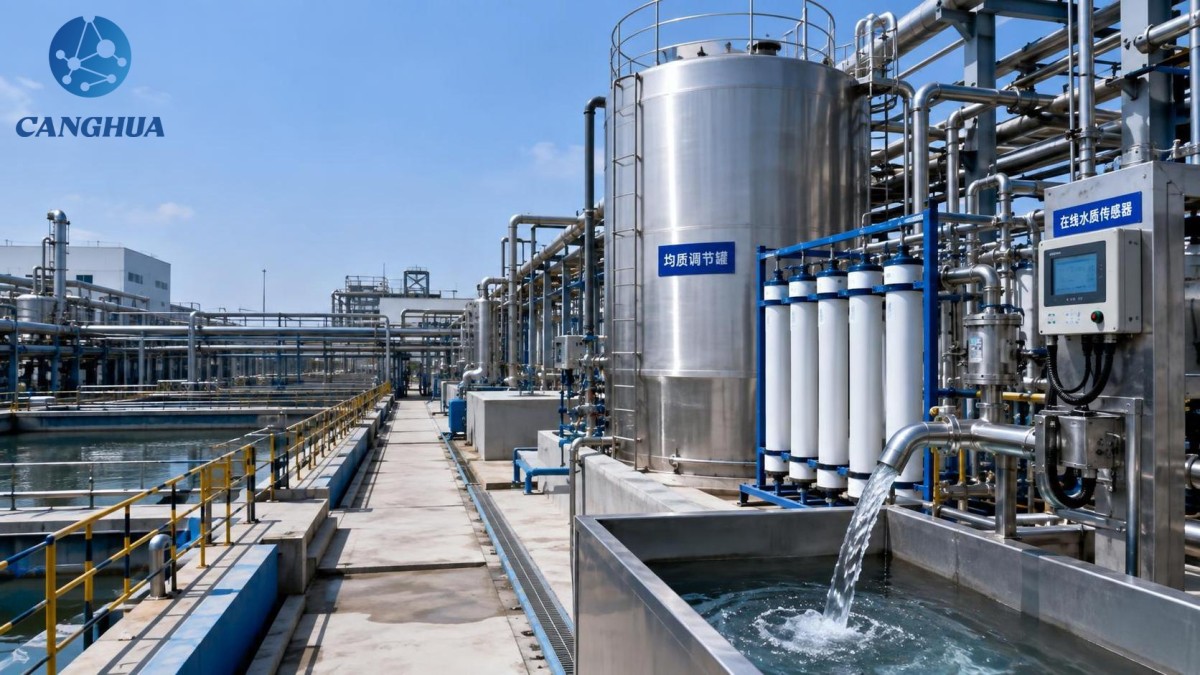
A treatment train is usually more dependable than a single technology
Effective industrial wastewater treatment typically combines several stages, each with a clear role. Equalization tanks smooth out changes in flow and pollutant concentration. pH adjustment and coagulation-flocculation can remove solids, metals, and certain emulsified materials. Biological treatment may reduce biodegradable organic load, while activated carbon, membrane filtration, advanced oxidation, or ion exchange can target pollutants that remain after conventional treatment.
For chemical sites considering water reuse, the final polishing step matters greatly. Reclaimed water may be suitable for cooling towers, washdown, scrubbers, or utility applications, but only when its quality matches the intended use. Reuse is not automatically the right answer; membrane concentrate, scaling risk, microbiological control, and operating cost need to be evaluated honestly.
Environmental performance extends beyond wastewater
Water treatment & environmental planning should also account for air and solid waste pathways. Volatile organic compounds can escape during storage, blending, reaction, and wastewater handling. Depending on the source and concentration, facilities may use local exhaust capture, adsorption, thermal oxidation, scrubbing, or vapor recovery. The best choice depends on the contaminant, airflow, energy use, and the potential for recovered material to be reused.
Sludge deserves the same attention. Dewatered sludge may contain concentrated pollutants that were successfully removed from water but have not disappeared from the environmental equation. Characterization, secure storage, transport arrangements, and compliant disposal or recovery routes should be planned alongside the liquid treatment process. Moving contaminants from one medium to another is not a complete environmental solution.
Operational discipline is where compliance becomes durable
A well-designed plant can still struggle if operators lack clear control points. Routine checks should focus on the parameters that signal trouble early: pH drift, flow surges, dissolved oxygen in biological systems, sludge condition, filter pressure, membrane differential pressure, and influent load changes. Online monitoring can provide useful visibility, but laboratory verification and informed operator observation remain essential.
Facilities also benefit from separating high-strength streams from relatively clean water wherever possible. Sending every drain to the same treatment unit increases hydraulic load and can dilute opportunities for targeted recovery. Segregation often makes chemical dosing, treatment stability, and water reuse decisions easier to manage.
Questions to ask before selecting a solution
- What pollutants are present during normal production and during cleaning or emergency events?
- Which discharge limits, permits, and local environmental requirements apply now and may change later?
- Can high-load, toxic, oily, or saline streams be isolated at source?
- What level of automation is appropriate for the site’s staffing and maintenance capability?
- Will the treatment process generate sludge, concentrate, spent media, or off-gas that needs separate handling?
- Is water reuse technically useful, or would it add complexity without meaningful benefit?
The strongest environmental strategy is not necessarily the most complex one. It is the one that fits the chemistry, production rhythm, regulatory context, and people responsible for running it every day. With sound characterization, sensible treatment sequencing, and disciplined monitoring, chemical manufacturers can reduce environmental risk while using water and materials more responsibly.