
APPLICATIONS
Chemistry for Diverse Industries
Reliable chemical solutions supporting agriculture, food, pharmaceuticals, manufacturing and other industries worldwide.
Related Posts
- ▶ When should a water treatment chemical dosage be adjusted?
- ▶ When are inorganic chemicals a better fit than organic alternatives?
- ▶ How to verify batch consistency in industrial chemical raw materials
- ▶ How to qualify pharmaceutical raw materials before production approval
- ▶ How recycled content changes the performance of plastic raw materials
- ▶ How agricultural chemical prices affect seasonal purchasing plans
Send Us A Message
When should a water treatment chemical dosage be adjusted?
A water treatment chemical dosage should be adjusted whenever the water entering the system or the treatment objective changes enough that the current dose no longer produces a stable result. In daily operation, this often becomes visible through rising turbidity after clarification, a drifting residual disinfectant level, unusual scale formation, increased corrosion indicators, filter pressure changes, or inconsistent effluent quality.
Do not change dosage simply because a tank level looks different or because the previous setting has been used for a long time. The practical approach is to confirm what has changed, test the relevant control parameters, make a controlled adjustment, and verify the response. This prevents both underdosing, which can leave contaminants untreated, and overdosing, which can waste chemicals or create secondary problems.
Conditions that commonly trigger a dosage review
Raw-water quality is one of the main reasons to reassess Water Treatment Chemicals. Surface water may become more turbid after rainfall, while groundwater can show changes in hardness, iron, manganese, alkalinity, or dissolved solids. Industrial reuse water may vary with production schedules, cleaning cycles, or incoming wastewater composition. A dose that worked during stable conditions may no longer match the current chemical demand.
- Flow rate changes: A higher flow rate usually increases the total amount of chemical needed per hour, even when the dose rate per unit volume remains unchanged. Lower flow can create the opposite issue if pumps continue feeding at the previous speed.
- pH or alkalinity shifts: Coagulants, corrosion inhibitors, scale inhibitors, oxidizers, and disinfectants can all respond differently when pH changes. Some products lose effectiveness outside their preferred operating range.
- Temperature variation: Colder water may slow reaction rates and settling, while warmer water can increase biological activity, evaporation, and corrosion risk.
- Higher solids or turbidity: More suspended matter can raise coagulant and flocculant demand. The correct response is not always “add more”; mixing conditions and polymer selection may also need checking.
- Changes in treatment targets: A stricter effluent requirement, a new reuse application, or a need to protect downstream membranes may require a different control point or dosage range.
Start with the symptom, then identify the control parameter
When water quality becomes unstable, identify the operating symptom before adjusting a feed pump. For example, cloudy clarifier overflow may be related to insufficient coagulant, poor rapid mixing, incorrect polymer addition point, excessive sludge blanket level, or sudden raw-water variation. Increasing the chemical dose without checking these conditions can mask the real issue and make solids separation worse.
Likewise, a low disinfectant residual does not automatically mean the disinfectant feed is too low. The cause may be increased organic load, higher microbial demand, reduced contact time, unsuitable pH, or a dosing point located too close to the sampling point. Test the residual at a consistent location and after the intended contact period before deciding on a dosage change.
Make dosage changes in a controlled sequence
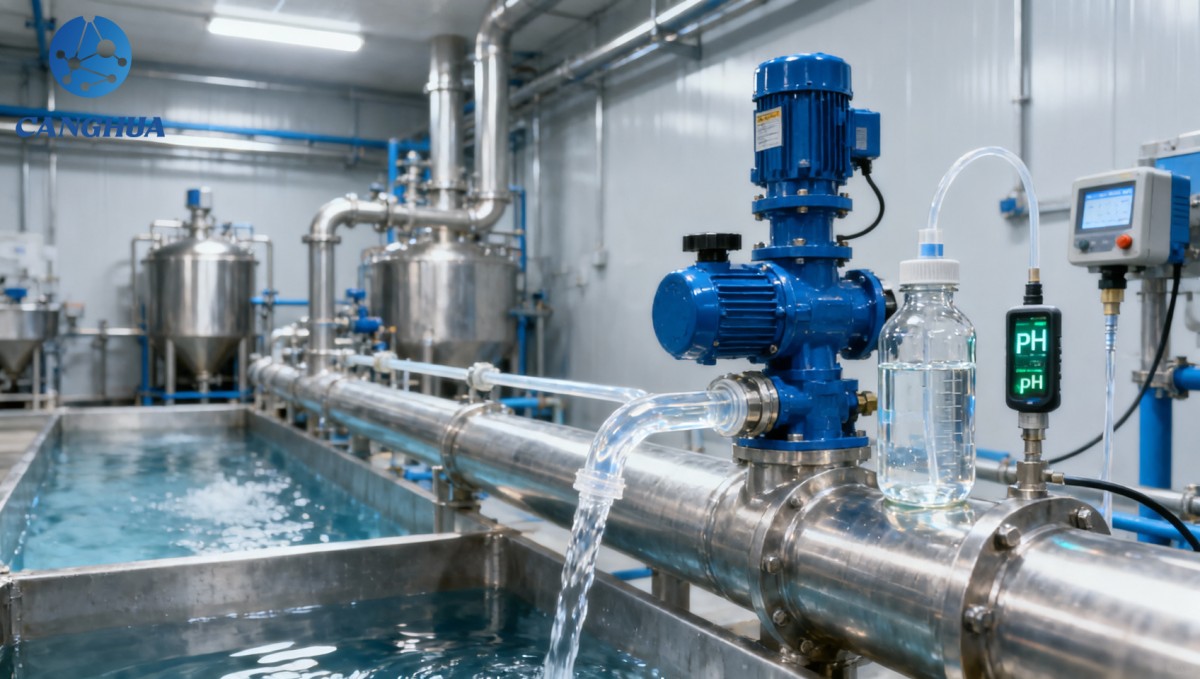
Begin by checking whether the chemical feed equipment is delivering the intended amount. Inspect pump stroke or speed, calibration, suction line condition, injection quill, tank concentration, and any signs of crystallization, settling, leakage, or air locks. A process may appear to need more chemical when the real problem is an inaccurate dosing pump or a diluted preparation tank.
Next, collect a representative water sample and compare it with the normal operating condition. Depending on the process, useful measurements may include pH, conductivity, turbidity, hardness, alkalinity, oxidant residual, iron, microbial indicators, or inhibitor residual. For coagulation programs, a jar test can help compare dose changes before applying them to the full system.
Adjust one relevant variable at a time where possible. Small, documented changes are easier to evaluate than large changes made to several chemicals at once. Allow sufficient mixing and contact time, then check the same performance indicators used to identify the issue. Record the water condition, dosage setting, test result, time, and any operational change such as flow variation or blowdown adjustment.
When a higher dose is not the right answer
Repeatedly increasing chemical consumption without restoring control is a warning sign. In cooling-water systems, poor blowdown control or high cycles of concentration may drive scaling despite a higher inhibitor feed. In wastewater clarification, incorrect pH or weak mixing can limit coagulation even with additional coagulant. In disinfection, excessive organic loading may consume oxidizer faster than expected and require upstream treatment rather than continual dose escalation.
Review storage and handling as well. Some chemicals can degrade, separate, freeze, react with contamination, or lose effective concentration when stored improperly. Confirm the product concentration and preparation method before changing the target dose. When water chemistry changes sharply, equipment is affected, or a treatment residual cannot be stabilized, further process testing is needed before making major dosage changes.
- Last One:No more articles
- Next Article:When are inorganic chemicals a better fit than organic alternatives?2026-09-09