





CHEMICAL PRODUCTS
Reliable chemical products
Explore our chemical product portfolio covering industrial raw materials, organic and inorganic chemicals, agricultural chemicals, additives and more.
‹
›

Poly(methyl methacrylate) CAS#9011-14-7
Basic Information
CAS No.: 9011-14-7
Molecular Formula: (C5H8O2)x
Molecular weight: 100.12
Can't Find The Product You Need?
Tell Us Your Product Requirements, Specifications And Target Industry, Our Professional Team Will Reply You Within 24 Hours.
Product Details
Polymethyl methacrylate (PMMA), commonly known as acrylic or “organic glass,” is a polymer with the chemical formula (C₅O₂H₈)ₙ. It is characterized by high transparency, low cost, and excellent machinability. As a widely used substitute for conventional glass, PMMA is extensively applied in the manufacture of transparent products, medical devices, construction materials, and decorative items.
PMMA is produced through the polymerization of methyl methacrylate monomers, during which an initiator promotes reactions involving the monomers’ double bonds to form long-chain polymer structures. The synthesis process is relatively simple, and different polymerization methods can be employed to adjust the molecular weight and molecular structure of the resulting material to suit the requirements of specific applications.
Poly(methyl methacrylate) Chemical Properties
Product Application of Poly(methyl methacrylate) CAS#9011-14-7
Poly(methyl methacrylate) is used in combination with dental tray powder to manufacture dentures and serves as a basic raw material for dental trays and prostheses.
It is also applied in the production of printing plates, light-curable coatings, adhesives, and inks.
In addition, this material is used in various fields, including biochemistry, biomedicine, cosmetic intermediates, conductive polymers, and plasticizer pastes.
Furthermore, poly(methyl methacrylate) is employed in manufacturing transparent components for aircraft, automobiles, and ships, as well as optical lenses, architectural decorative elements, and other related products.
Factory Showcase

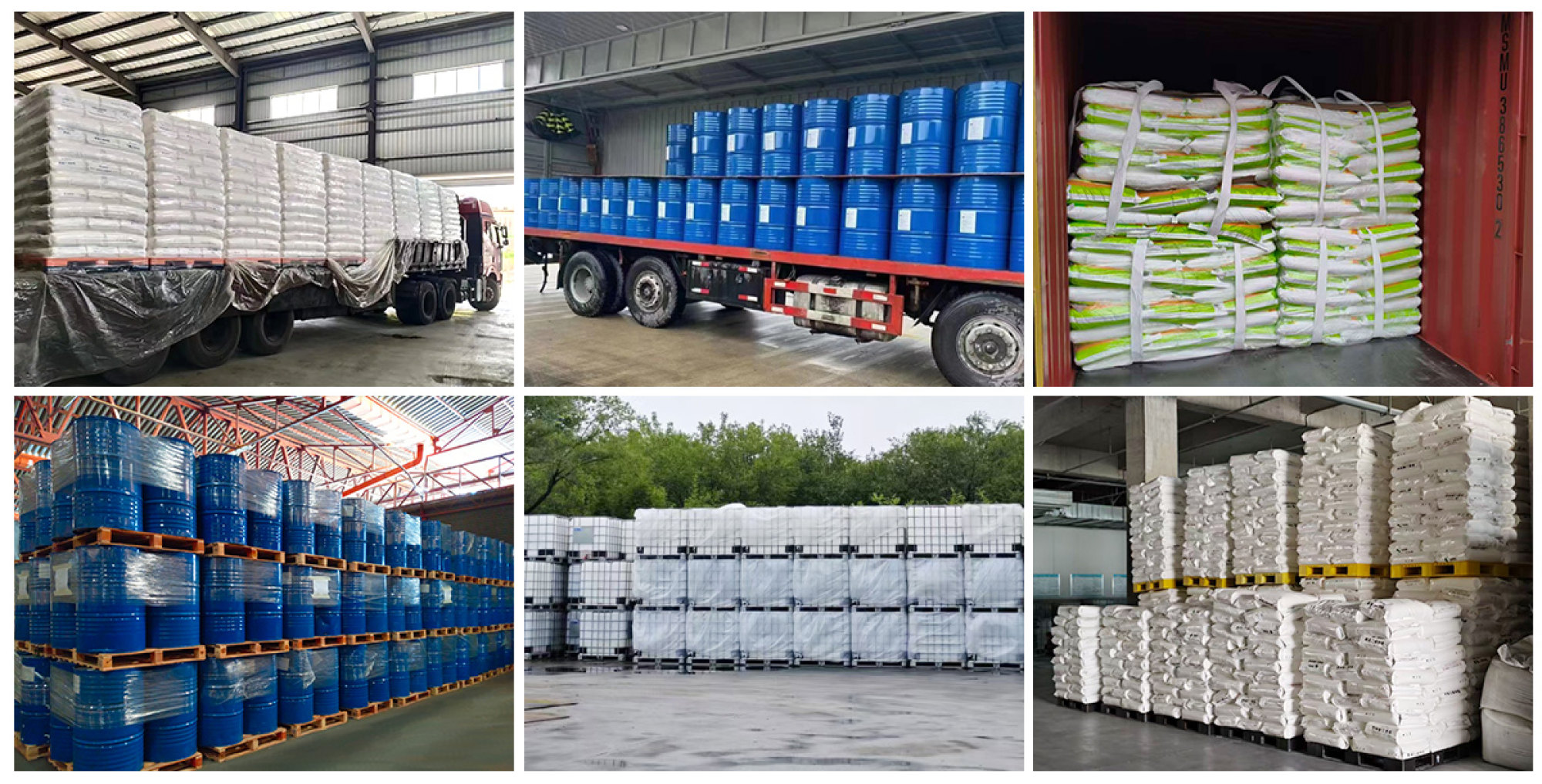
Shipping And Transportation
FAQ
Q1: What international standards do your products and services comply with?
A1: Our products fully comply with international standards such as REACH, MSDS, and COA, and we strictly implement the ISO9001 quality management system. We can also provide third-party testing reports (SGS, BV, etc.) according to customer needs.
Q2: How long does it take for goods to be delivered to my country?
A2: The delivery time depends on the transport mode and destination country. Generally, sea transport takes 15-30 days, air transport takes 3-7 days, and we will optimize the transport route to shorten the delivery time as much as possible.
Can you provide customs clearance services for dangerous chemicals?
A3: Yes. Our team is proficient in the customs clearance procedures for dangerous chemicals in various countries, and can provide professional compliant declaration and customs clearance services to ensure smooth customs clearance.
Q4: Do you provide customized product and service solutions?
A4: Yes. We can provide personalized product customization and export service solutions according to your specific needs (product specifications, application scenarios, procurement volume, etc.).
Contact Us
Related Recommendations
 Toluene-2,4-diisocyanateCAS No.: 584-84-9
Molecular Formula: C₉H₆N₂O₂
Molecular weight: 174.16Learn More →
 Toluene-2,6-diisocyanateCAS No.: 91-08-7
Molecular Formula: C₉H₆N₂O₂
Molecular weight: 174.16Learn More →
 Toluene diisocyanateCAS No.: 26471-62-5
Molecular Formula: C₉H₆N₂O₂
Molecular weight: 174.16Learn More →
 2,42,6-DiaminotolueneCAS No.: 25376-45-8
Molecular Formula: C₇H₁₀N₂
Molecular weight: 122.17Learn More →
 Sodium Hydroxide SolutionCAS No.: 1310-73-2
Molecular Formula: NaOH
Molecular weight: 40.00Learn More →
 UreaCAS No.: 57-13-6
Molecular Formula: CH₄N₂O
Molecular weight: 60.06Learn More →
 Sodium hydroxideCAS No.: 1310-73-2
Molecular Formula: NaOH
Molecular weight: 40.00Learn More →
![]() Isophorone diisocyanate CAS#4098-71-9Basic Information
CAS No.: 4098-71-9
Molecular Formula: C12H18N2O2
Molecular weight: 222.28Learn More →